
ENVIRONMENTAL INTELLIGENCE
Biology collects the signal. Science makes it useful.
Bees sample the landscape around your site every day. EcoPulse turns what they collect into repeatable environmental evidence—helping you track detected plant taxa, understand seasonal change and strengthen your monitoring programme.
EcoPulse is a recurring environmental biomonitoring subscription designed to complement your existing ecological methods.
FROM FIELD TO FINDINGS
Four steps. One clearer picture of your site.
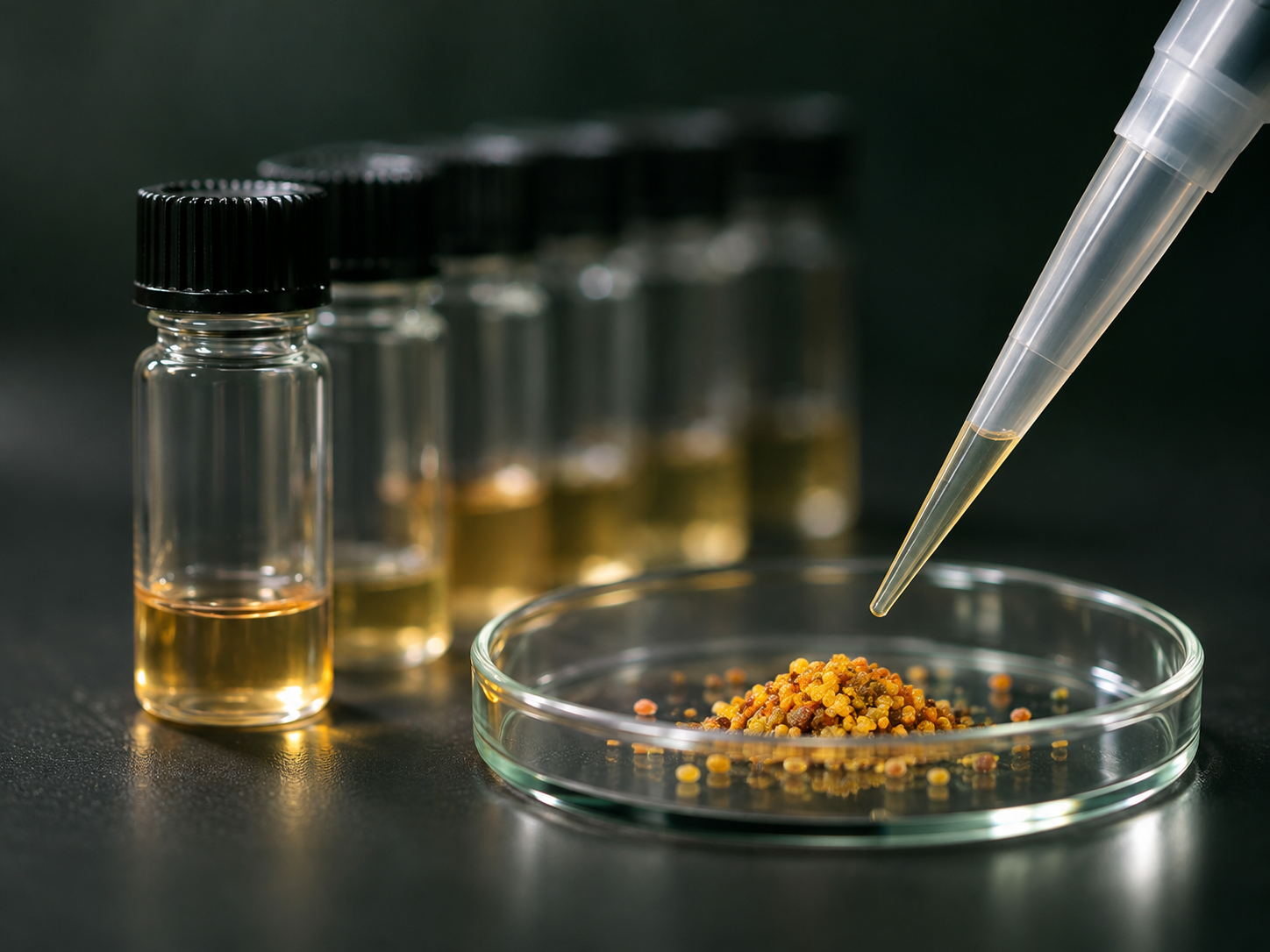
EcoPulse combines biological sampling, laboratory analysis and scientific interpretation in a recurring monitoring programme. The result is structured seasonal findings—not just a collection of samples.
01 · Design your monitoring plan
Define the site, environmental question, sampling locations, seasonal schedule and analytical approach.
02 · Sample the landscape
Managed honey bee colonies collect pollen and other environmental materials. Samples are captured under a documented protocol.
03 · Analyse the evidence
Selected laboratory methods examine the sample. Plant DNA metabarcoding can help identify taxa represented in mixed pollen samples.
04 · Receive your findings
Get structured seasonal reporting with results, methods and interpretation. Confirm dashboard availability and inclusions for your subscription plan.

A DIFFERENT VIEW OF THE LANDSCAPE
Your site doesn’t end at its boundary.
Flowering plants change through the season, habitats connect across property boundaries and environmental signals can come from beyond the area you directly manage.
Honey bees forage across their surroundings and bring pollen back to the hive. That pollen contains plant material—and DNA that can help identify the plants represented in a sample. Repeated sampling can build a picture of detected plant taxa and how their composition changes over time.
- Repeated sampling: collect evidence across agreed periods rather than relying on a single survey date.
- Landscape context: sample plant material brought back by bees from the area they use.
- Seasonal comparison: examine changes between sampling periods when the design is consistent.
Hive placement, colony numbers and sampling frequency influence what the monitoring can reveal. The foraging area is variable, not a fixed circular boundary.
FROM SAMPLES TO USEFUL OUTPUTS
Environmental evidence your team can work with.
EcoPulse is designed to turn repeated sampling and laboratory analysis into structured findings that help your team understand what is changing, identify questions for follow-up and communicate the evidence behind environmental decisions.
The exact indicators and deliverables depend on the subscription plan, sampling design and analytical methods selected.
| Output | What it tells you | How you can use it |
|---|---|---|
| Detected plant taxa | Which plant taxa are represented in analysed pollen samples, at the level supported by the method. | Understand the plants detected through the monitoring period. |
| Seasonal composition | How the list of detected taxa changes between sampling periods. | Review seasonal patterns and identify changes for further investigation. |
| Between-site comparison | Similarities and differences between samples collected under a comparable design. | Compare locations within a portfolio or monitoring programme. |
| Methods and sampling record | How samples were collected and analysed, including relevant protocol details. | Give technical reviewers a clear account of how findings were produced. |
| Interpretation and limitations | What the results support, what remains uncertain and where complementary evidence may help. | Communicate findings responsibly and plan follow-up work. |
| Targeted contaminant results — optional | Results for specified substances in agreed sample matrices, where suitable methods are available. | Investigate selected environmental questions alongside conventional measurements. |
Designed for decisions, not just data
- Review changes in plant taxa detected around a site.
- Identify questions that warrant a follow-up field survey.
- Compare monitoring periods using a consistent approach.
- Prepare supporting evidence for internal environmental reviews and stakeholder discussions.
- Integrate relevant findings into a wider biodiversity monitoring programme.
EcoPulse outputs can support sustainability and biodiversity reporting workflows. They do not, by themselves, establish regulatory compliance or replace the evidence required by a particular reporting framework, permit or assessment.

BUILT AROUND YOUR LANDSCAPE
Every subscription starts with site design.
A useful monitoring programme begins with a clear question. The right sampling design depends on the area you want to understand, the season, the available locations and the decisions the results should support.
Together, we define the area of interest, colony locations and coverage, seasonal schedule, sample handling requirements and analytical objectives. The plan is tailored to the site rather than imposed as a one-size-fits-all package.
Consistency makes comparisons useful
Weather, flowering phenology, colony activity and sampling procedures can influence what a sample contains. A documented, repeatable protocol helps technical teams interpret differences between samples and sampling periods.
EVIDENCE YOU CAN EXPLAIN
Results you can defend to a technical reviewer.
Environmental information is useful when its origins and interpretation are clear. EcoPulse brings the sampling context, analytical method and findings together so reviewers can understand how the evidence was produced.
Traceable samples
Link each sample to its collection context, including relevant location, date, sample type and handling record under the agreed protocol.
Appropriate methods
Match plant DNA analysis or contaminant testing to the intended question and document relevant method requirements.
Transparent identification
Report plant identifications at the level supported by the marker, sequence quality and reference database.
Documented interpretation
Present findings with relevant sampling and analytical context, including important assumptions.
HONEST BY DESIGN
Clear about what the evidence can—and cannot—tell you.
EcoPulse adds a valuable source of environmental evidence, but it is not a universal measure of biodiversity. Honey bees sample the plants they visit, not every plant or wild pollinator. DNA detections do not directly measure plant abundance, and a hive sample does not pinpoint the precise source of a signal. We make these boundaries clear so findings can be interpreted appropriately.
COMPLEMENTARY ENVIRONMENTAL EVIDENCE
EcoPulse works alongside your existing methods.
EcoPulse is designed to complement established environmental monitoring—not compete with the ecologists, laboratories and survey methods already supporting your site.
Botanical field surveys
Direct observation can identify species and estimate cover or abundance at surveyed locations. EcoPulse can add repeated signals from bee-collected pollen between survey visits.
Remote sensing
Satellite and aerial data provide broad land-cover and vegetation context. Biological samples can add taxonomic information imagery may not resolve.
Soil, water and air sampling
Point-based methods measure specified variables at a defined place. Bee matrices integrate contact across a foraging period and need different interpretation.
Pollinator surveys
Direct surveys provide information about pollinator presence or activity. EcoPulse can add evidence about plants represented in honey bee-collected samples.
OPTIONAL ANALYTICAL MODULE
Investigate specific environmental substances.
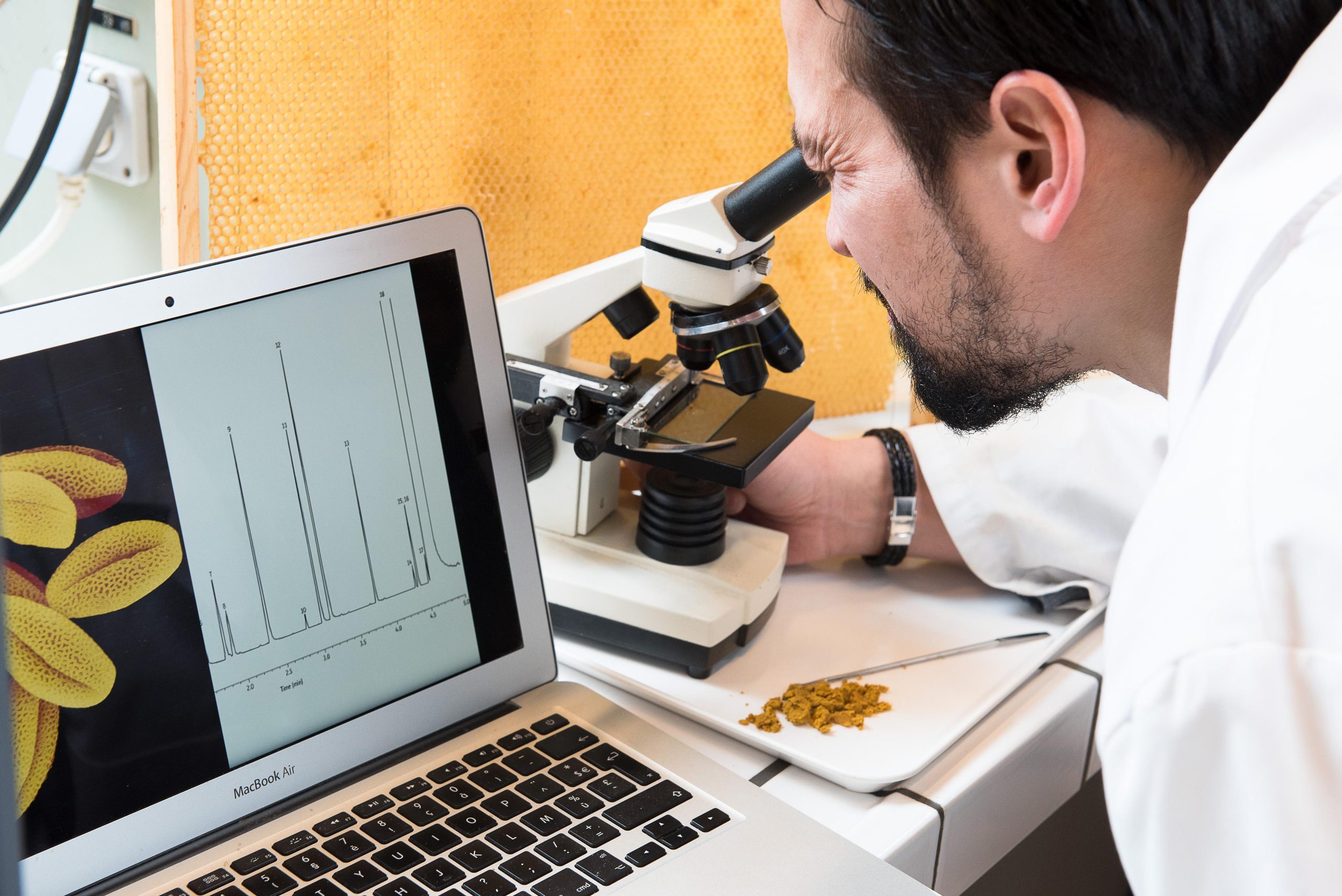
Honey bees and hive materials have been studied as biomonitoring matrices for pesticides, metals and other environmental substances. Where an environmental question calls for contaminant analysis, targeted laboratory testing may complement the core EcoPulse monitoring programme.
The target substance, sample matrix, preparation procedure, analytical method and laboratory capability must be matched to the question. A finding in bee-collected material describes a result for that sample and method; it does not automatically establish a concentration or source in soil, water or air at a particular location.
Availability: confirm the analyte list, laboratory method, detection and quantification limits and sample requirements before specifying this module.
RESEARCH AND INNOVATION
Built on European research.
Pollenity’s technology work connects field deployments, connected beekeeping devices and European research collaborations. HIVEOPOLIS explored technology-augmented hives, including automated honey harvesting and a hive-entrance device. SENSORBEES is developing approaches to automated, selective pollen collection and visual pollen analysis. These research programmes have distinct objectives and methods; the visual pollen-analysis approach in SENSORBEES is separate from the eDNA metabarcoding used for plant identification in EcoPulse.
Project objectives, partner roles and outputs are documented in official project records and on the Academia page.
HIVEOPOLIS
European research project exploring technology-augmented hives and new approaches to hive management.
Explore project →SENSORBEES
Research programme exploring automated selective pollen collection and visual pollen analysis.
Explore project →Research portfolio
Explore Pollenity’s research projects, collaborations and opportunities for scientific work.
Visit Academia →THE SCIENCE, EXPLAINED
Technical questions from environmental teams
What does pollen DNA analysis tell you?
Plant pollen contains DNA. DNA metabarcoding examines selected genetic marker regions in a mixed sample and compares the resulting sequences with reference databases. Depending on the marker, sample quality and reference coverage, the method can identify plant taxa at species, genus or family level.
Can DNA read counts tell us how abundant a plant is?
Not reliably on their own. Differences in DNA content, primer performance and amplification affect the number of sequence reads associated with different plants. Read proportions should not automatically be treated as plant cover, abundance or pollen-grain proportions.
What taxonomic resolution can EcoPulse provide?
Resolution depends on the marker, sequence quality, reference database and the relationship between closely related taxa. Reports should reflect the level supported by the evidence.
Which sample types can be analysed?
Pollen is relevant to plant DNA analysis. Other hive materials have been used in biomonitoring research, but they are not interchangeable. The matrices offered through EcoPulse should be specified according to the actual service and question.
How far do bees travel from a hive?
Foraging distances vary with season, weather, colony conditions and forage availability. A hive sample represents material collected across a changing foraging area, not a fixed circular boundary.
Can a hive sample identify the exact source of a plant or contaminant?
No. A sample generally cannot pinpoint the precise location where a plant or substance was encountered. Source attribution requires evidence appropriate to that question.
What does a negative result mean?
A non-detection means the target was not detected under the conditions of the sample and method used. It does not necessarily prove absence from the wider landscape.
Can EcoPulse test for pesticides, metals, PFAS or microplastics?
These substances require different methods and may require different sample matrices. Availability, detection limits and laboratory capabilities must be confirmed for each proposed analysis.
Does EcoPulse replace botanical surveys or statutory monitoring?
No. EcoPulse complements existing methods. Direct surveys or specialist measurements may be required for species verification, abundance estimates, precise source attribution or prescribed regulatory requirements.
Technical details to confirm before publication: current DNA markers, laboratory workflow, sample matrices, reference databases, quality-control procedures and available contaminant panels.
YOUR SITE. YOUR QUESTIONS. A CLEARER MONITORING PLAN.
Start with your site.
Tell us where you operate, what you need to understand and which environmental decisions the evidence should support. We will assess whether EcoPulse fits your monitoring needs and outline the next steps.
Start with the site, the question and the evidence you need.